
Choosing air conditioning for a nursery or young family
By Clara Abbott · Updated 2026-07-25
This is general information, not medical advice. For specific guidance on temperature and safety for your baby or child, talk to your GP or child health nurse.
Cooling a nursery or a home with young kids brings a slightly different set of priorities to a general air conditioning decision: consistency, noise, and safe airflow tend to matter more than they do in a living room or study.
Why nurseries need a bit more thought
Babies can’t regulate their body temperature as effectively as adults, and overheating is a recognised risk factor that health guidance around safe sleep takes seriously. That doesn’t mean a nursery needs to be cold, it means the room needs to stay reliably comfortable without big swings, which is where a well-sized, properly placed system does a better job than a portable unit shuffled in from another room.
Placement matters more here than elsewhere
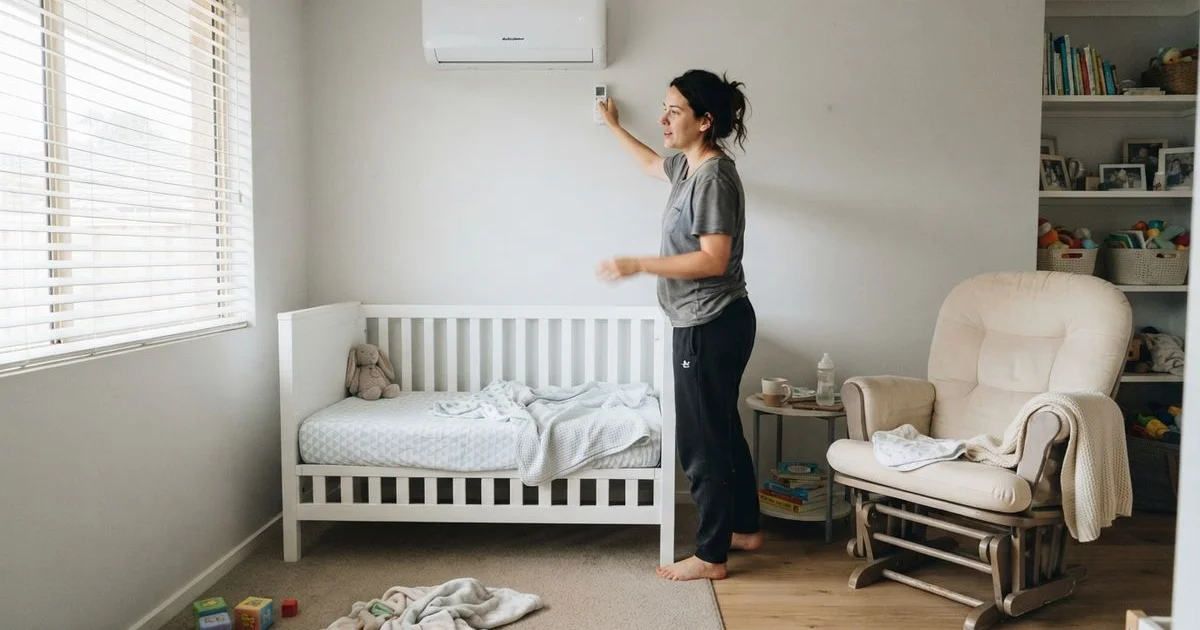
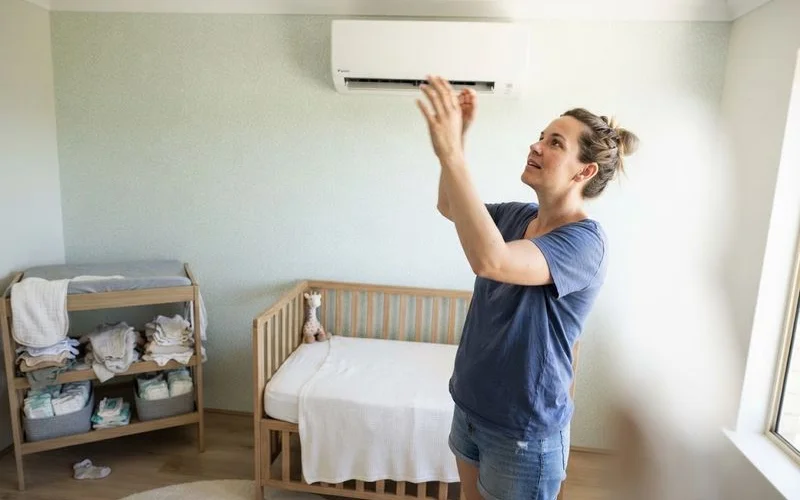
Where the indoor unit sits, and which direction it faces, deserves more thought in a nursery than in most other rooms. Avoid positioning it so airflow blows directly onto a cot or bassinet, since a steady stream of cool air on a sleeping baby isn’t ideal. A wall-mounted unit that circulates air around the room, rather than pointing straight down at the bed, generally gives more even, comfortable cooling without the direct-draft issue.
| Consideration | Why it matters for a nursery |
|---|---|
| Temperature consistency | Reduces sudden swings that can disturb sleep or overheat a baby |
| Airflow direction | Avoid direct airflow onto a cot or bassinet |
| Noise level | Low-noise operation matters more overnight, in a quiet room |
| Unit type | A properly installed split system usually beats a portable unit on consistency |
Noise is a bigger factor than you’d think
A living room can tolerate a bit of indoor unit hum without anyone noticing, but a quiet nursery at 2am is a different environment. When you’re comparing units or asking an installer for advice, ask specifically about the indoor unit’s noise level at low fan speeds, since that’s the setting it’ll likely run at overnight. A system that’s whisper-quiet on paper at full speed isn’t necessarily quiet at the low, steady setting a nursery actually needs.
Setting it up for the rest of the household
If you’re cooling a whole home with young kids rather than just a nursery, think about zoning if you’re considering a ducted system, since kids’ bedrooms, play areas and living spaces often need to run on different schedules than the rest of the house. A steady, moderate setting overnight in bedrooms, with more active cooling during the day in living areas, tends to work better than one setting for the whole home around the clock.
A few practical steps
If you’re installing new or upgrading before a baby arrives, get the nursery’s sizing and placement assessed properly rather than assuming a small room needs the smallest unit available, since undersized systems can struggle and end up running constantly, which affects both noise and running cost. If you already have a system in place, a straightforward adjustment of airflow direction and a check of the overnight noise level is often enough to make an existing setup nursery-friendly without new equipment.
As kids get older
The considerations shift a little as a nursery becomes a toddler’s room and then a school-age kid’s bedroom. Direct airflow onto a bed matters less once a child is mobile and can move themselves if a spot feels too cold, but noise still matters for a good night’s sleep, and a system that cycles on and off loudly can be as disruptive as one that’s simply too warm or too cool. If you’re planning a system that needs to serve a child’s room for years rather than just the newborn stage, ask your installer about running the unit on a lower, steadier setting overnight rather than one designed to blast the room cold quickly and switch off.
Talking to an installer about a nursery specifically
When you’re getting quotes, mention that the room is a nursery or a young child’s bedroom rather than treating it as a generic bedroom quote. A good installer will factor that into where they recommend mounting the indoor unit and may suggest a slightly different fan speed setting or airflow direction than they would for an adult’s room. It costs nothing to mention and can save you from having to ask for adjustments after installation.
If you’re also looking after an older relative in the same home, our guide on helping an elderly parent stay cool and safe through a Perth summer covers the different considerations that come with an older household member.
Visit our home page for other guides on choosing and running air conditioning in Perth, and see our methodology page for how we assess local contractors.
FAQ
- What temperature is generally recommended for a baby's room?
- Health guidance commonly points to keeping a baby's room comfortably cool rather than cold or overheated, since overheating is a recognised risk factor for infants. If you're unsure what's right for your baby's age and health, your child health nurse or GP is a better source than a general rule of thumb.
- Should the air conditioner run all night in a nursery?
- Many parents find a steady, moderate setting through the night works better than switching the unit on and off, which can cause the room temperature to swing. A quiet system matters more here than in other rooms, since indoor head noise can be more noticeable at low overnight volumes.
- Where should the indoor unit be positioned in a nursery?
- Avoid pointing the airflow directly at a cot or bassinet, since direct airflow on a sleeping baby isn't ideal. A wall position that lets air circulate around the room, rather than blast straight down on the bed, is generally the better setup.
- Is a split system or a portable unit better for a nursery?
- A properly installed split system is generally quieter and more consistent than a portable unit, which tends to be noisier and less efficient at holding a steady temperature. If a nursery is a new addition to the house, it's worth budgeting for a proper installation rather than a temporary fix.