
What air conditioning installation costs in Perth
By Clara Abbott · Updated 2026-07-08
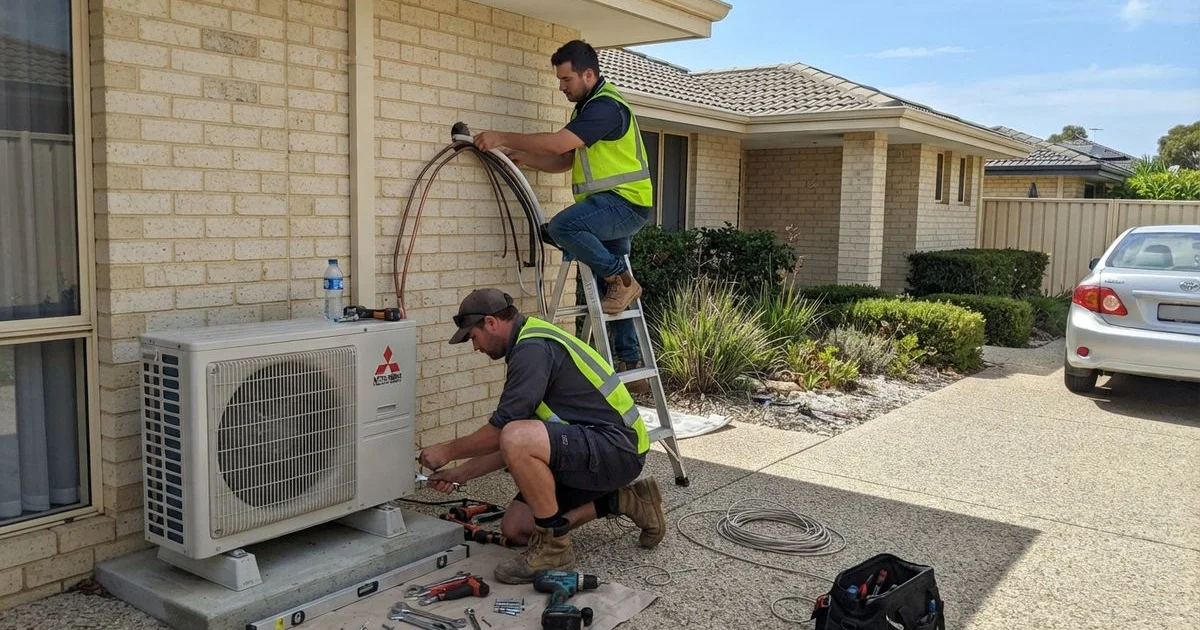
Air conditioning installation is one of the bigger home spending decisions in Perth, and the price range you’ll see quoted is wide enough to be confusing. A lot of that spread comes down to three things: the size and type of system, the brand tier, and how straightforward the installation itself is. Once you understand those three levers, quotes start to make a lot more sense.
If you’re weighing up options, our air conditioning installation hub lists contractors across the metro area who handle this work, so you can compare more than one quote before deciding.
What drives the price
The unit itself is priced by cooling capacity, measured in kilowatts. A small single-room split system costs less than a large system covering an open-plan living area, simply because it moves more air and needs a bigger compressor. On top of that, brand tier matters: budget and premium units at the same capacity can sit a fair way apart in price, and installation difficulty adds its own cost, since a second-storey unit or a long pipe run through brick veneer takes longer to fit than a straightforward ground-floor wall with easy access.
Here’s a rough guide to where installed pricing typically lands, based on capacity and how much the brand and site conditions push the number up or down:
| System size | Typical use | Rough installed price range |
|---|---|---|
| Small (up to 2.5kW) | Single bedroom or small study | $900 to $1,750 |
| Medium (3.5 to 5kW) | Living area or open-plan room | $1,400 to $2,800 |
| Large (6 to 8kW) | Open-plan living and dining | $2,150 to $4,200 |
| Extra large (9kW+) | Whole floor or large open space | $2,900 to $5,600 |
These are indicative bands, not a quote. The low end assumes a budget-to-mid brand and an easy install; the high end assumes a premium brand and a harder job. A licensed installer needs to see your space to confirm the real number.
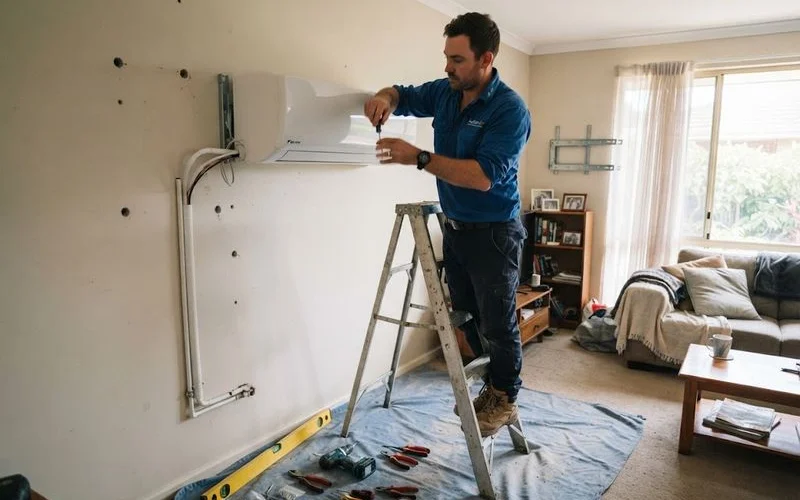
What can push a quote higher
A few site conditions come up again and again in installation jobs:
- Pipe run length. The further the outdoor unit sits from the indoor head, the more refrigerant line, insulation and cable are needed.
- Wall type. Brick veneer and double brick take longer to core-drill than a standard timber-frame wall.
- Electrical capacity. Older homes sometimes need a dedicated circuit added before a new system can be wired in safely, which adds an electrician’s time to the job.
- Second storey or roof access. Working at height or through a tight roof cavity slows the job down and usually carries a higher labour charge.
- Old unit removal. Not every quote includes taking away and disposing of the unit you’re replacing, so check whether that’s built in or billed separately.
Reading a quote properly
A fixed, written quote should name the brand, model and capacity in kilowatts rather than a vague “supply and install” line. It should also say clearly what warranty covers labour versus parts, since those are often different lengths and come from different places, the manufacturer for the unit, the installer for their own workmanship. If a contractor is willing to quote a firm price without seeing your space, that’s worth a second look; correct sizing depends on room size, ceiling height, insulation and sun exposure, and a phone-only quote can’t account for those properly.
Getting two or three quotes is the simplest way to sanity-check pricing, and it also gives you a feel for which installer explains the job clearly rather than just naming a number. If you want a clearer picture of what happens between accepting a quote and the unit switching on, our guide to what to expect from an air conditioning installation walks through each step.
Frequently asked next steps
Once you have a rough budget in mind, the next practical step is working out roughly what capacity your space actually needs, since that’s what determines which row of the table above applies to you. From there, comparing installers on licensing, warranty terms and how they handle site conditions like pipe runs and electrical capacity will tell you more about the real cost than the headline price alone.
You can read more about how we rank contractors on our methodology page, and browse other guides on our home page for the buying and servicing questions that come up before and after installation day.
FAQ
- What is the cheapest type of air conditioning to install?
- A single small split system for one room is generally the lowest-cost option, since it needs one indoor head, one outdoor unit and a short pipe run. Multi-head splits and ducted systems cost more because they cover more area and need more materials and labour.
- Does the quote usually include the unit and the labour together?
- It should. Ask for a written quote that separates the unit cost, installation labour, any electrical work, and disposal of an old unit, so you can see exactly what you're paying for rather than one lump figure.
- Why do two quotes for the same size unit come back so different?
- Brand tier is one factor: a budget unit and a premium one at the same capacity can price a long way apart. Installation difficulty is the other: a second-storey job or a long pipe run through brick veneer takes more time than a straightforward ground-floor wall.
- Should I always go with the cheapest quote?
- Not automatically. Check what's included first. A quote that's noticeably lower may be leaving out electrical work, disposal of the old unit, or a proper warranty, and that gap tends to show up later as an unexpected extra charge.
Related on this site
- Browse new ac installation providers
- What to expect from an air conditioning installation, step by step
- Noise rules, council approval and body corporate consent for outdoor units in Perth
- What a ducted air conditioning system costs in Perth
- Aircon regas cost in Perth: when you need one and what it involves
- All guides →